

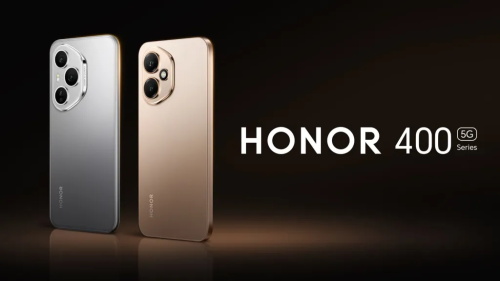
Honor has introduced a highly anticipated AI feature—AI Image Animation (image-to-video)—for the first time in its latest upper-midrange smartphone series, the Honor 400 and Honor 400 Pro. This feature is powered by Google Cloud’s Vertex AI platform and its video-generation model Veo 2. It represents the latest deep collaboration between Honor and Google and is among the world’s first smartphone implementations of this technology.
Powered by Veo 2: Turning Static Photos into Animated Clips
Honor’s “Gallery” app has the image-to-video feature built in. Users simply select a photo, and the AI can generate an MP4-format video clip of up to 5 seconds in just a minute or two, supporting both landscape and portrait outputs. Google’s Veo 2 model is renowned for its strong capabilities in semantic fidelity, motion simulation, and physical consistency. In Google’s own demos and tests, Veo 2 can generate 8-second, 720p, nearly cinematic dynamic scenes, outperforming many competitors in user-prompt fidelity and preference.
Honor’s version focuses on ease of use and safety: there’s no text-prompt input. The AI can only “imagine” and generate animation based on a single user-uploaded image. This design helps reduce the risk of maliciously creating misleading or fake content (for example, making someone appear to do something they never did).
In real-world testing, results are quite polarized. For photos with clear, simple subjects—like pets or portraits—the animation is smooth and natural, adding lifelike blinking, head turns, or smiles. But in complex scenes, the AI sometimes produces amusing or absurd results, such as making a parked vintage car spin weirdly in place or turning a women's soccer match into a bizarre 27-player, two-referee free-for-all.
For the first two months, Honor 400-series users can try the feature at no cost, with a daily cap of 10 generated videos. After that, users will need to subscribe to a Google service to unlock more uses, though specific pricing details have not yet been announced.
Beyond Veo 2: A Full Suite of Integrated Google AI Features
The Honor 400 series doesn’t just offer Veo 2–powered image-to-video generation. It also comes preloaded with multiple AI features based on Google’s Gemini large model, including:
- Circle to Search: draw a circle on the screen to trigger Google Search
- AI Summary: automatic summarization
- AI Superzoom: super-resolution zoom
- AI Portrait Snap: portrait shooting optimization
- AI Eraser: intelligent cutout and background removal
Honor has also stated that it will continue leveraging the combination of Google Gemini and Veo to give its smartphones even stronger real-world understanding capabilities.
Flagship-Level Imaging Hardware: 200MP Main Camera + Edge-Cloud AI Imaging System
Beyond AI features, the Honor 400 series doesn’t compromise on camera hardware. Both models come with a 200MP Samsung HP3 main sensor, supporting 16-in-1 pixel binning to deliver clear, detailed images even in low light. Honor claims its night photography and dynamic tracking can “put competitors on the floor.”
The Honor 400 Pro takes things even further, adding a 50MP telephoto lens and a 12MP ultra-wide lens. Combined with its proprietary AIMAGE edge-cloud collaborative AI system, this enables even better low-light noise reduction and motion tracking.
Core Specs and Pricing
The two models also underscore their flagship positioning with core specs:
Honor 400
- Processor: Qualcomm Snapdragon 7 Gen 3
- Display: 6.55-inch Vivid AMOLED
- Storage options and pricing:
- 12GB + 256GB: €499
- 12GB + 512GB: €549
Honor 400 Pro
- Processor: Qualcomm Snapdragon 8 Gen 3
- Display: 6.7-inch FHD+ (1080×2412)
- Storage option and pricing:
- 12GB + 512GB: €799
With top-tier hardware and deeply integrated Google AI, Honor aims to position itself as the “imaging flagship of the AI era” in the fiercely competitive upper-midrange market. The emergence of generative AI video tools like Veo 2 suggests that future smartphone competition in content creation and expression will be less about camera hardware alone and more about the sophistication of AI understanding and generation.

FTC vs. Meta
The FTC vs. Meta: Will WhatsApp and Instagram Be Forced to Split?
The judge is expected to rule later this year on whether Meta has illegally monopolized the “personal social networking” market.
Why WhatsApp’s AI Summaries Don’t Break End-to-End Encryption
Many people use WhatsApp precisely because of its end-to-end encryption. Simply put, this encryption method ensures that messages are readable only by you and the person you’re chatting with.
AI-Powered ‘Digital Immortality‘
AI-Powered ‘Digital Immortality’: Would You Upload Your Mind?
Movies have been playing with this idea for years. In Source Code, for example, the protagonist’s consciousness is uploaded into an 8-minute time loop, repeating endlessly to solve a mystery.